Have you ever wondered about the Jasmine meaning in the Bible and its deeper spiritual significance? Although jasmine is not directly mentioned in Scripture, this beautiful flower is often associated with purity, love, hope, and spiritual beauty. Exploring its symbolism can help you reflect on God’s creation and strengthen your faith.
The biblical and spiritual meaning of jasmine offers a beautiful way to understand themes of faith, divine love, and inner peace. Whether you are exploring the Christian meaning of the name Jasmine, its spiritual symbolism, or its interpretation in dreams, this guide will help you discover its cultural roots and meaningful connections to biblical teachings.
Jasmine Flower Symbolism in the Bible: Purity, Hope, and Divine Love
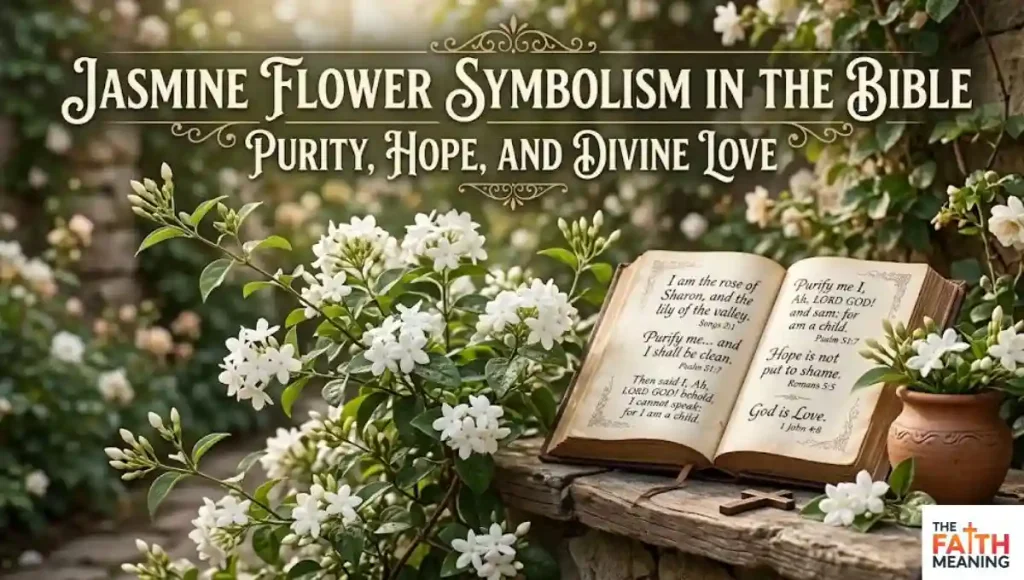
The jasmine flower is small, white, and deeply fragrant. These traits mirror ideas that Scripture repeats often.
- Purity: White petals picture a cleansed heart, as in Psalm 51:7.
- Hope: Night-blooming jasmine releases its scent after dark. It reminds us that joy can return in the morning (Psalm 30:5).
- Divine love: Fragrance spreads freely, much like God’s love poured into our hearts (Romans 5:5).
This symbolic jasmine meaning is not a verse-by-verse claim. It is a faith-based reflection built on how the Bible uses flowers and fragrance.
What Can the Name Jasmine Teach Us About Faith and Spiritual Growth?
Jasmine is a climbing plant. It grows best with a trellis to lean on. Believers grow the same way when they remain in Christ, the true vine (John 15:5).
Growth also takes patience. A jasmine vine may look plain for months before it blooms. Spiritual seasons often work like that too.
So the jasmine meaning for spiritual growth is simple. Lean on God, stay patient, and let your life carry a sweet fragrance.
Read more: Iris Name Meaning in the Bible | A Message of Hope, Promise, and God’s Presence
Biblical Meaning of Jasmine — What the Scripture Tells Us
Scripture loves the language of scent. Offerings, anointing oils, and gardens appear throughout the Bible. Since jasmine is missing, its biblical meaning is best read through the fragrant plants God’s people did know.
| Plant | Key Verse | Spiritual Idea |
| Spikenard | John 12:3 | Devotion and honor |
| Lily | Song of Solomon 2:1 | Beauty and purity |
| Rose of Sharon | Song of Solomon 2:1 | Love and delight |
| Frankincense | Matthew 2:11 | Worship |
| Myrrh | Song of Solomon 5:5 | Sacrifice and love |
Paul adds that believers are the “aroma of Christ” (2 Corinthians 2:15). That one idea captures the biblical jasmine meaning better than any plant list.
Is Jasmine in the Bible? Here’s the Truth
No. Jasmine is not mentioned by name in major Bible translations. The Bible was written in Hebrew, Aramaic, and Greek, in lands where jasmine was not a common plant. Jasmine is native to warm regions of Asia.
Some websites claim a direct verse. Be careful with those claims. A trustworthy jasmine meaning stays honest: it is symbolic, not scriptural.
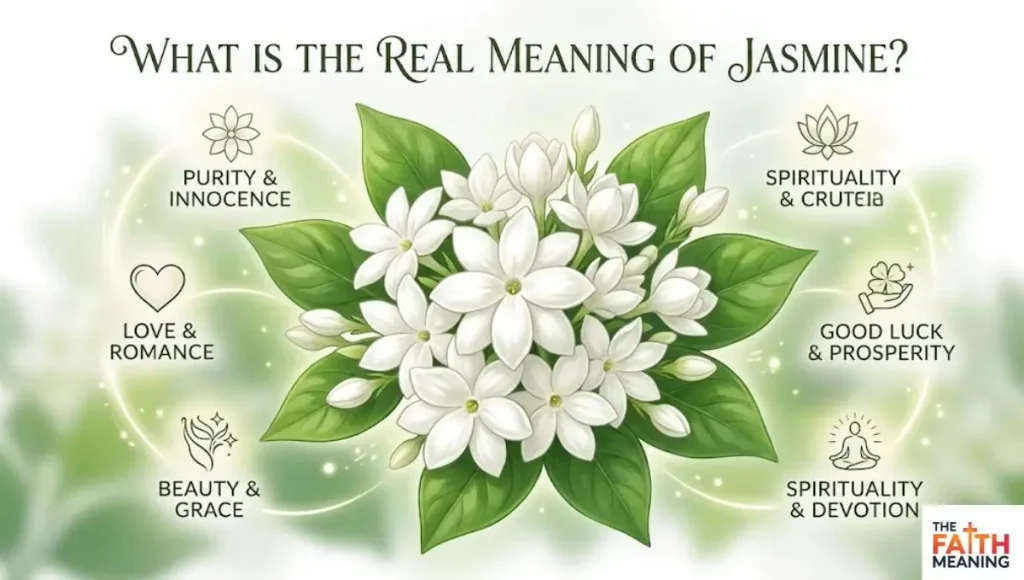
What Is the Real Meaning of Jasmine?
The name comes from the Persian word yasmin, which means jasmine flower. It passed into Arabic, then Middle French, and finally English in the 1500s.
Many baby-name sources also translate it as “gift from God.” That is a popular, devotional reading rather than a strict dictionary one. Both ideas shape the modern jasmine meaning.
Key Symbolic Meanings of Jasmine:
- Purity and innocence
- Love and affection
- Hope and renewal
- Grace and beauty
- Healing and comfort
Why Does Jasmine Mean “Gift from God”?
Persian names often link nature with blessing. A fragrant flower was seen as a present from heaven. Over time, families began translating Yasmin as “gift from God.”
Christians hear an echo of James 1:17, which says every good gift comes from above. That is why this jasmine meaning feels natural for believers. It turns a flower into a daily reminder of grace.
Jasmine Meaning in Hebrew — The Deeper Linguistic Root
Biblical Hebrew has no root word for jasmine. Modern Hebrew uses Yasmin, borrowed from Persian and Arabic, as both a flower name and a girl’s name.
Hebrew does offer related ideas. Besamim means spices or fragrant perfumes. Names like Matanyah (gift of the Lord) and Netan’el (God has given) carry the “gift” idea directly.
So the Hebrew jasmine meaning is a blend. It joins a borrowed flower name with Hebrew themes of fragrance and divine giving.
What Does the Name Jasmine Mean in Christianity?
Some Christian traditions link white flowers, including jasmine, with the purity of the Virgin Mary. These links are cultural, not doctrinal.
Most believers focus on the lessons the flower teaches. The Christian jasmine meaning centers on purity, grace, and a life that smells of Christ.
What Jasmine Represents in Christian Faith:
- Purity: A clean heart before God
- Grace: A gift we do not earn
- Devotion: Love expressed through worship
- Witness: A life that shares Christ’s fragrance
Spiritual Meaning of the Name Jasmine
Spiritually, Jasmine suggests peace, tenderness, and quiet strength. The flower’s scent is often used to calm the mind, so many link it with inner rest.
For a believer, that peace points to Christ, who offers rest to the weary (Matthew 11:28). A girl named Jasmine can see her name as a call to bring calm and kindness wherever she goes. The spiritual jasmine meaning is not magic. It is an invitation to live gracefully.
Jasmine Meaning in Islam
Yasmin is a widely loved name in Muslim families. It simply means jasmine flower, and parents choose it for its beauty and sweet sound. The Quran does not mention jasmine by name.
Islamic tradition does record the Prophet Muhammad’s fondness for pleasant scents. Gardens are also a major image of paradise in the Quran. Together, these ideas shape the Islamic jasmine meaning: beauty, cleanliness, and a hint of paradise.
Biblical Interpretations of Jasmine in Dreams
The Bible does not give a dream dictionary for flowers. It teaches that interpretations belong to God (Genesis 40:8). So any reading should stay humble.
If you dream of jasmine, ask yourself:
- Did I feel peace or sadness in the dream?
- Is God reminding me to be grateful?
- Do I need comfort, healing, or a fresh start?
Treat it as an invitation to pray, not a prediction. A dream-based jasmine meaning should always be tested against Scripture and shared with a trusted pastor.
Spiritual Significance and Symbolism of Jasmine
Jasmine carries spiritual weight across many cultures.
| Culture | Common Symbolism |
| Christian | Purity, grace, devotion |
| Islamic | Beauty, paradise imagery, the name Yasmin |
| Persian | Word origin, gift, poetry |
| Hindu | Temple offerings, devotion |
| Chinese | Jasmine tea, sweetness, affection |
Step-by-Step: How to Apply Jasmine’s Spiritual Meaning to Your Faith Life
- Pause and pray. Start the day by thanking God for one good gift.
- Read a fragrance passage. Try John 12:1–8 or 2 Corinthians 2:14–16.
- Choose a trellis. Join a church group or find a prayer partner.
- Share your fragrance. Offer a kind word, a meal, or a quiet visit.
- Journal your growth. Note where you have bloomed after hard seasons.
Follow these steps for a month, and the jasmine meaning will move from idea to habit.
Jasmine Name Personality — What Faith and Culture Say
People often describe those named Jasmine as caring, creative, and charming. These are cultural impressions, not scientific facts. Still, a name can shape how a person sees herself.
Faith adds a deeper layer. A believer named Jasmine may feel called to be gentle yet strong, like a vine that climbs steadily.
Practical Lessons and Faith Insights from Jasmine’s Meaning
- Bloom in the dark: Hope does not need daylight.
- Lean on support: Faith grows in community.
- Give freely: Fragrance cannot be kept to itself.
- Value small things: Tiny flowers can fill a whole room.
FAQs
What is the jasmine meaning in the Bible?
Jasmine is not named in Scripture, but its symbols of purity, fragrance, and grace match biblical themes.
Is Jasmine a biblical name?
No. It is Persian in origin, though many believers connect it to the idea of divine gifts.
What is the spiritual jasmine meaning?
It points to peace, purity, hope, and love. It reminds believers of God’s gentle presence.
Does Jasmine really mean “gift from God”?
That is a popular devotional reading. The strict translation is “jasmine flower.”
What is the jasmine meaning in Hebrew?
Biblical Hebrew has no word for it. Yasmin is a modern borrowed name and flower term.
Is jasmine mentioned in the Quran?
Not by name. However, Yasmin is a common Muslim name meaning jasmine flower.
What does jasmine symbolize in dreams?
Often peace, comfort, or purity. Interpret it prayerfully, not as a prediction.
Which verses match Jasmine’s symbolism?
The Song of Solomon 2:1, John 12:3, and 2 Corinthians 2:15 speak of beauty, devotion, and fragrance.
Conclusion
The Bible does not name jasmine. Still, the flower speaks clearly through purity, hope, and fragrance. Its Persian and Arabic roots add the sweet idea of a gift. Together, they form a faith-friendly jasmine meaning.
Let this message shape your week. Lean on God, bloom in hard seasons, and share kindness freely. Stay honest about what Scripture says and what is symbolism. Then your life will carry its own fragrance of grace.

Welcome to TheFaithMeaning! I’m Abdul Rehman.
Christian Faith Writer | 5+ Years of Biblical Research | Founder of TheFaithMeaning.com
I share well-researched Bible Name Meanings, Spiritual Meanings, and Biblical insights to help readers discover the deeper meaning of Scripture and grow in their faith.