
The Tristan Name Meaning in Bible explores the spiritual symbolism, historical origins, and Christian significance of this unique name. Although Tristan is not mentioned directly in Scripture, its traditional association with sorrow connects to biblical themes of faith, courage, perseverance, and hope.
Discover the spiritual meaning of Tristan, its Celtic origins, and its connection to Christian values and biblical teachings. This guide explores Tristan’s name meaning, possible biblical connections, and spiritual lessons to help parents choose a meaningful baby name rooted in faith and hope.
Tristan Meaning in Bible–More Than Just a Name
Tristan is not a biblical name. The Tristan name meaning comes from medieval Europe, not from Hebrew or Greek Scripture.
Still, the Bible treats names seriously. A name often marks a calling, a promise, or a life event. So it is natural to look for a spiritual angle in the Tristan name meaning.
That angle exists. But it is thematic, not textual. Honest readers should keep that difference clear.
Tristan Name Meaning in Catholic Tradition and Christianity
The Catholic Church welcomes Tristan as a baptismal name. Church law only asks parents to avoid names foreign to a Christian sense. Tristan passes that test easily.
No widely known saint named Tristan appears in the main Catholic calendar. Even so, the Tristan name meaning of “sorrowful” fits Christian teaching on suffering joined to Christ.
Catholic, Orthodox, and Protestant families all use the name. They usually choose it for its sound, its history, or its quiet link to faith through trials.
Positive and Negative Personality Traits Associated With the Name Tristan
Name-personality links are cultural, not scientific. Still, many people describe Tristan in similar ways.
| Positive Traits | Negative Traits |
| Loyal and devoted | Moody or brooding |
| Brave and adventurous | Prone to melancholy |
| Romantic and caring | Overly idealistic |
| Creative and thoughtful | Restless or impulsive |
| Resilient under pressure | Guarded with emotions |
These traits echo the legend of Tristan and Iseult. The Tristan name meaning often suggests a person who feels deeply.
Tristan Name Meaning Bible

When people search for the Tristan name meaning Bible readers want a direct answer. Here it is: the Bible gives no definition for Tristan.
What you find online are spiritual interpretations. Those are reflections, not Scripture. Because the Bible speaks often about sorrow and hope, writers link the name to those themes.
What Does the Name Tristan Mean?
The most accepted Tristan name meaning is “sorrowful” or “sad.” A second layer points to “tumult” or “uproar.”
- Origin: Brittonic (Celtic), shaped by Old French
- Main meaning: Sorrowful; noisy tumult
- Gender: Mainly male
- Variants: Tristram, Tristen, Tristin, Drustan
Etymology and Historical Origins of Tristan
The name began as Drustan or Drust, a Pictish and Welsh name linked to “tumult.” Medieval French writers reshaped it into Tristan. They were likely influenced by the Latin tristis, meaning “sad.”
A 6th-century stone in Cornwall carries the name Drustanus. Many link it to the legend. So the Tristan name’s meaning blends Celtic history with Latin wordplay.
Is Tristan Mentioned in the Bible?
No. The name Tristan does not appear in the Old or New Testament. Hebrew, Aramaic, and Greek manuscripts contain no such name.
Names like Abraham, David, and Mary are biblical. Tristan belongs to medieval romance instead. Any claim of a “hidden” biblical Tristan has no manuscript support.
Read more: What Does the Name Dylan Mean? Origin, Spiritual Significance, and More 2026
Spiritual Significance of the Name Tristan

Though absent from Scripture, the name paints a meaningful spiritual picture. In the Bible, sorrow is rarely the end of the story.
The spiritual side of the Tristan name meaning is a journey. It moves from sorrow to strength, from trial to trust, and from pain to purpose.
Christian Symbolism and Faith Connections
- Sorrow turned to joy: Psalm 30:5 says joy follows the night of weeping.
- Endurance: Romans 5:3–4 links suffering to perseverance and hope.
- Comfort: Isaiah 61:3 promises beauty in place of ashes.
- Redemption: John 16:20 says grief will become joy.
This symbolism gives the Tristan name meaning a hopeful Christian reading.
Tristan in Biblical History and Tradition

Tristan has no place in biblical history. Its tradition belongs to medieval Christendom.
The tale of Tristan and Iseult spread across France, England, and Germany in the 12th and 13th centuries. Christian audiences read it as a story of love, loyalty, and tragic loss. Its moral lessons about faithfulness and consequences drew listeners in.
The Origin of Tristan in Celtic and Christian Culture
Celtic Britain gave the name its root. Christian Europe gave it fame. As courts and monasteries shared Arthurian stories, Tristan became a favorite across the Christian world.
Today, the Tristan name carries both Celtic grit and Christian-era tenderness.
Biblical Names Similar to Tristan
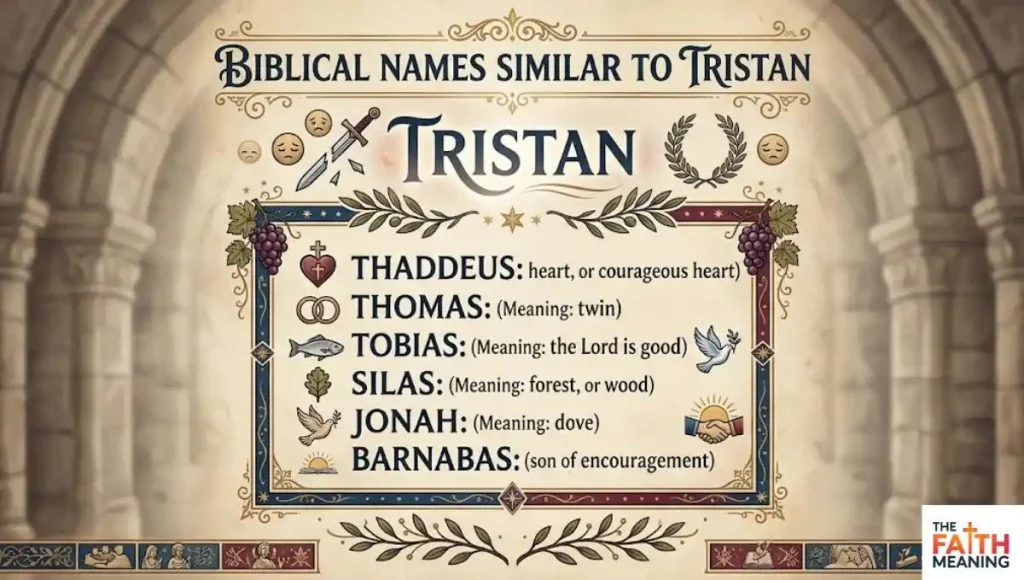
No biblical name matches Tristan in sound or origin. But several share its theme of sorrow or struggle.
| Name | Meaning | Reference |
| Jabez | Sorrow or pain | 1 Chronicles 4:9 |
| Ben-Oni | Son of my sorrow | Genesis 35:18 |
| Marah | Bitter | Exodus 15:23 |
| Naomi (Mara) | Pleasant / bitter | Ruth 1:20 |
| Tryphena | Delicate (a sound-alike only) | Romans 16:12 |
Ben-Oni became Benjamin, “son of the right hand.” That shows how God can turn sorrow into blessing.
Why Parents Choose Tristan: A Biblical Perspective
Most parents choose Tristan for style, not Scripture. Still, some add a faith layer:
- They love the heroic, romantic legend.
- They see hope rising out of sorrow.
- They pair it with a biblical middle name, such as David or Joel.
Pairing honors both worlds. The Tristan name meaning then becomes part of a larger family story.
Tristan Name Meaning in Hebrew
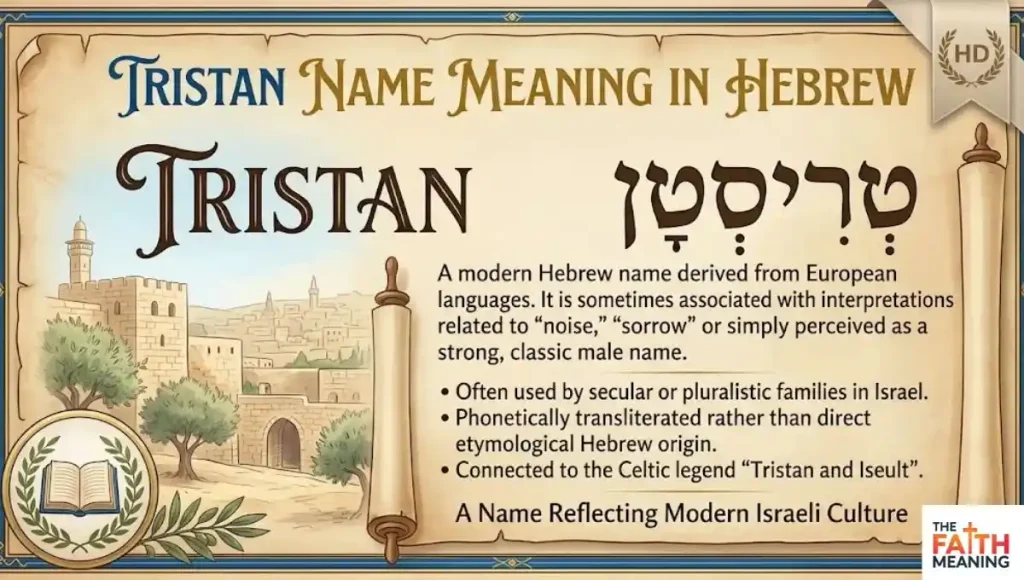
Tristan has no Hebrew origin. The Tristan name meaning in Hebrew exists only as a loose comparison.
Some writers link it to etzev (sorrow) and tikvah (hope). That is a theme match, not a translation.
Tristan Name Meaning in Greek
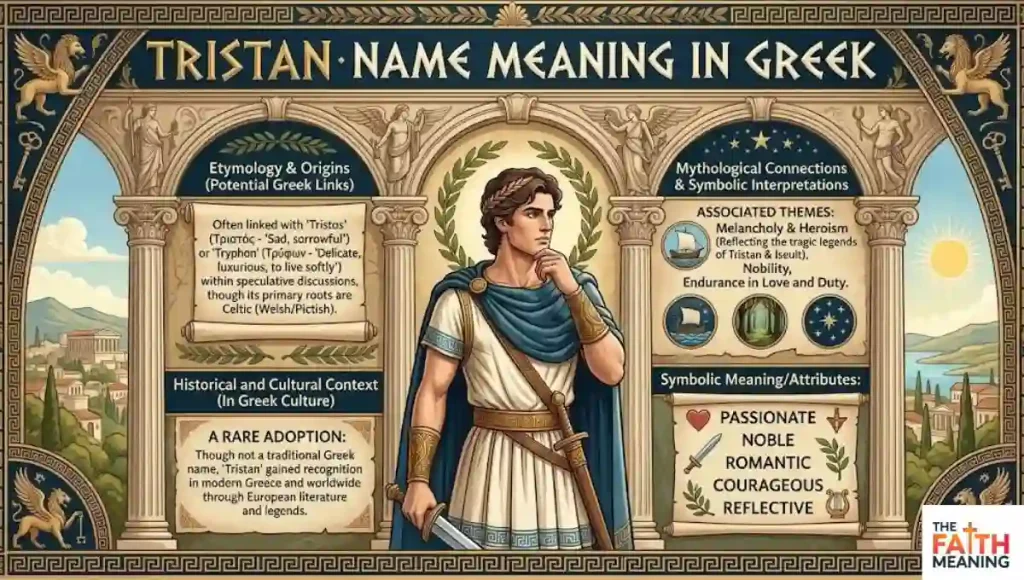
Tristan is not Greek either. The Greek New Testament does use lypē for sorrow, as in John 16:20.
So the Tristan name meaning in Greek is thematic only, never a direct link.
The Cultural and Religious Impact of the Name Tristan
Tristan shaped art, music, and literature. Wagner’s opera Tristan und Isolde helped make it famous. Modern parents in many English-speaking countries still choose it.
Christians often value it as a name that can hold faith through hard seasons. The Tristan name meaning keeps that literary echo alive.
What the Bible Teaches About Names and Identity
- Names reflect character: Abram became Abraham (Genesis 17:5).
- God can rename: Jacob became Israel (Genesis 32:28).
- New identity in Christ: 2 Corinthians 5:17 speaks of becoming new.
Your identity rests in God’s call, not in a name’s dictionary definition.
Biblical Interpretations in Dreams or Real Life
Some people ask whether seeing the name Tristan in a dream is a message. The Bible offers no code for dream names.
Test any impression with prayer, Scripture, and wise counsel. In real life, treat a name’s meaning as encouragement, not prediction.
Practical Lessons and Faith Insights
- Verify before you claim. Do not call Tristan biblical.
- Let sorrow lead to prayer. The Psalms show how.
- Hold on to hope. Scripture promises joy after grief.
- Choose names with care. Meaning and heritage both matter.
- Rest in your identity. God defines you, not a name.
Frequently Asked Questions
Is Tristan a biblical name?
No. Tristan does not appear in the Bible. It comes from Celtic and Old French roots.
What is the Tristan name meaning?
It usually means “sorrowful” or “sad.” An older Celtic root means “tumult” or “uproar.”
Is Tristan a Catholic name?
It is not a canonical saint’s name, but the Church accepts it for baptism.
Does Tristan have a Hebrew meaning?
No. It has no Hebrew origin. Any Hebrew link is a loose theme comparison only.
Is Tristan a good name for a Christian boy?
Yes. It is accepted widely, and its meaning connects with biblical hope after sorrow.
Which Bible names are similar to Tristan?
None match directly. Jabez, Ben-Oni, and Marah share its sorrow theme.
Where did the name Tristan originate?
It began as the Brittonic name Drustan. French medieval romances later made it famous.
What spiritual lesson does Tristan teach?
It reminds believers that sorrow can lead to strength, faith, and renewed hope.
Conclusion
The Tristan name meaning is “sorrowful,” with Celtic roots in “tumult.” The name is not in the Bible. Its power comes from history and legend, not from Scripture.
Still, faith can shape how we read it. Sorrow in the Bible leads to comfort, endurance, and joy. Choose Tristan for its beauty, and let God’s promises give it meaning.

Welcome to TheFaithMeaning! I’m Abdul Rehman.
Christian Faith Writer | 5+ Years of Biblical Research | Founder of TheFaithMeaning.com
I share well-researched Bible Name Meanings, Spiritual Meanings, and Biblical insights to help readers discover the deeper meaning of Scripture and grow in their faith.








1 thought on “Tristan Name Meaning in Bible: Discover the Spiritual Roots and Symbolism (2026)”