The deity meaning in the Bible refers to God’s divine nature, eternal power, and unique identity as the Creator. Understanding biblical deity helps Christians explore God’s attributes, the deity of Jesus Christ, and the Christian belief in the Trinity through Scripture.
Key Bible verses, including John 1:1, Colossians 2:9, and Matthew 28:19, reveal important teachings about God’s divine nature and Christ’s divinity. In this guide, discover the biblical definition of deity, its spiritual significance, the difference between deity and Godhead, and what these teachings mean for Christian faith.
What Does Deity Mean in the Bible?
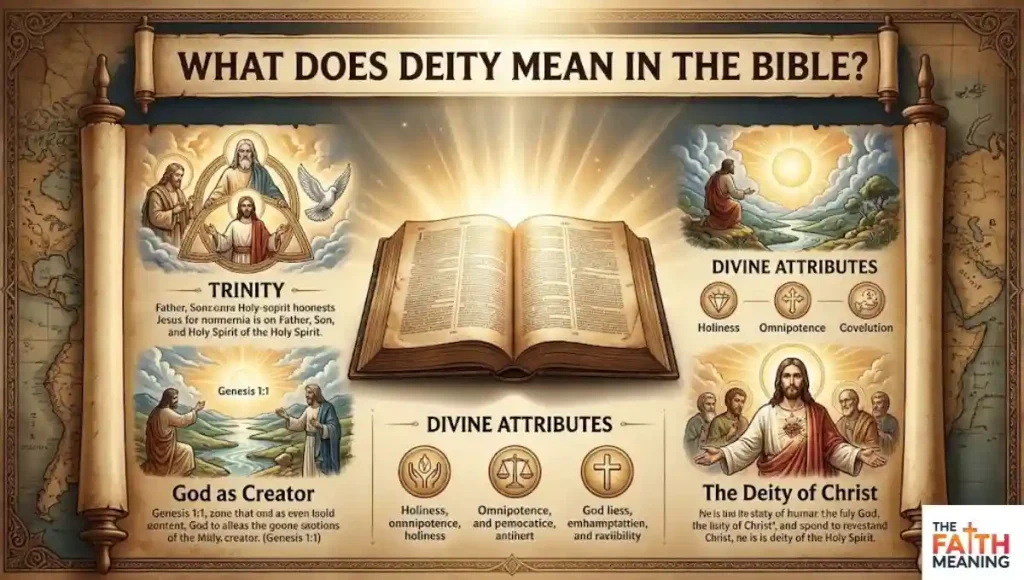
The word “deity” comes from the Latin deitas, meaning “divine nature.” The Bible rarely uses the English word, but the idea appears on almost every page. At its core, the deity meaning is simple: God is truly God. He is not created, limited, or dependent on anything.
Scripture points to several traits that define God’s deity:
- Eternal: He has no beginning and no end.
- Self-existent: He needs nothing to sustain Him.
- Omnipotent: He holds all power.
- Omnipresent: He is present everywhere.
- Omniscient: He knows all things.
- Holy: He is perfectly pure and set apart.
- Unchanging: He is the same yesterday, today, and forever.
The apostle Paul uses two Greek words that shape the biblical deity meaning. Theiotes in Romans 1:20 refers to God’s divine nature seen in creation. Theotes in Colossians 2:9 refers to the fullness of deity living in Christ.
Biblical Verses That Reveal the Deity of God
These passages help readers see the deity’s meaning clearly. Each one shows a different side of God’s divine nature.
| Verse | What It Reveals |
| Genesis 1:1 | God is Creator of all things |
| Exodus 3:14 | God is self-existent (“I AM”) |
| Psalm 90:2 | God is eternal |
| Isaiah 9:6 | The promised Son is called Mighty God |
| John 1:1 | The Word was God |
| John 10:30 | Jesus and the Father are one |
| Colossians 2:9 | The fullness of deity dwells in Christ |
| Hebrews 1:3 | Christ reflects God’s glory and nature |
| Revelation 1:8 | God is the Alpha and Omega |
Together, these verses show a steady pattern. The Bible presents one God who is above creation, yet involved in it.
Difference Between Deity, Divinity, and Godhead
These terms sound alike, but they are not identical. Knowing the difference sharpens your grasp of deity meaning.
| Term | Simple Meaning | Common Use |
| Deity | God’s identity as true God | Used for God or for a god |
| Divinity | The quality or state of being divine | Broader, more general |
| Godhead | The unity of the divine persons | Older term, found in the KJV |
In short, deity points to who God is. Divinity points to what quality He has. Godhead points to how the divine nature is united.
The Deity of God in the Old Testament
The Old Testament introduces God’s deity through His names, His works, and His covenant. Each name adds depth to the deity meaning for Israel.
- Elohim: the mighty Creator
- YHWH (Yahweh): the eternal, covenant-keeping Lord
- El Shaddai: God Almighty
- Adonai: the sovereign Master
The Shema in Deuteronomy 6:4 declares that the Lord is one. Isaiah 44:6 and 45:5 go further, stating that there is no other God. These texts make the Old Testament deity meaning very clear: God alone is worthy of worship.
God also showed His deity through acts. He created the heavens, parted the sea, and spoke through the prophets. His power was never a theory. It was seen in history.
Read more: What is the Biblical Meaning of Snakes in a Dream?
Biblical Meaning of Deity
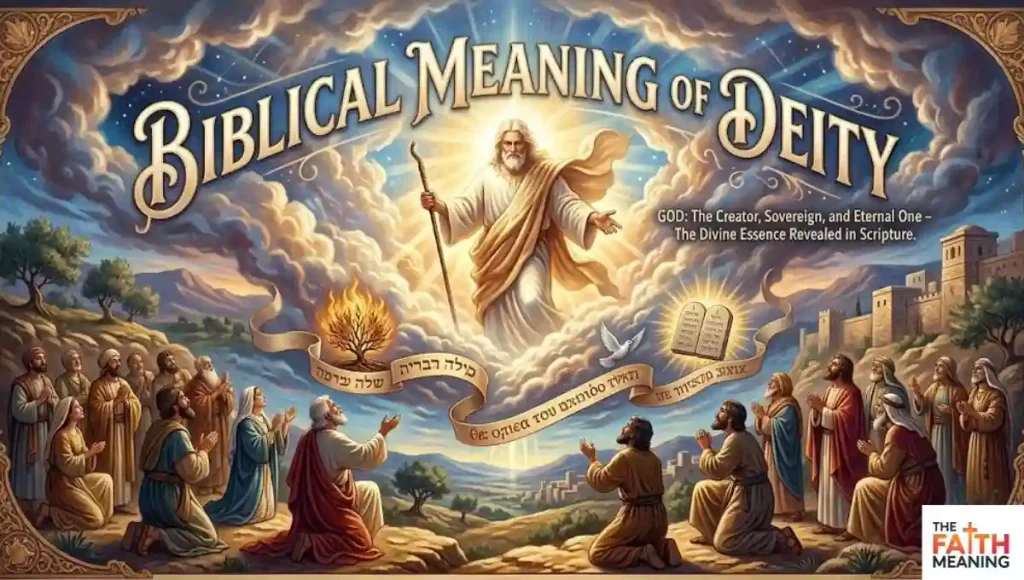
Now let us look at the biblical meaning of deity from several angles.
1. Definition of Deity in the Bible
A clear definition helps here. In biblical terms, deity means the full essence and nature of God. It includes His power, holiness, love, and authority. This deity meaning applies only to the one true God, never to created beings.
2. Deity of God the Father
The Father is revealed as Creator, Sustainer, and Judge. Jesus called Him “Father” and taught believers to do the same. The Father’s deity shows through His sovereignty over all things and His faithful care for His people.
3. Deity of Jesus Christ
Many readers search for the deity meaning of Jesus because it is central to Christian faith. The New Testament supports it in several ways:
- His claims: In John 8:58, Jesus says, “Before Abraham was, I am.”
- His titles: He is called God (John 1:1), Lord, and Savior (Titus 2:13).
- His worship: Thomas calls Him “My Lord and my God” (John 20:28).
- His works: He forgave sins, calmed storms, and raised the dead.
- His nature: Colossians 2:9 says the fullness of deity lives in Him.
This is why Christians confess that Jesus is fully God and fully man.
4. Deity and the Trinity
The Trinity teaches that God is one being in three persons: Father, Son, and Holy Spirit. Matthew 28:19 and 2 Corinthians 13:14 place all three together. The deity meaning here is not three gods. It is one God, shared fully by three persons.
Spiritual Significance and Symbolism of Deity

Deity is not only a doctrine to study. It is also a living reality that shapes the heart.
1. Deity as God’s Presence
The deity’s meaning includes God’s nearness. The name Immanuel means “God with us.” In the tabernacle, the temple, and later in Christ, God chose to dwell among His people. His presence is a sign of both holiness and love.
2. Deity and Human Faith
Faith grows when we know who God truly is. Hebrews 11:6 says that anyone who comes to God must believe that He exists. A right view of deity meaning gives faith a firm foundation. We trust Him because He is all-powerful and good.
3. Transformation Through Knowing God
Second Corinthians 3:18 teaches that believers are changed as they behold the Lord’s glory. Knowing God’s deity reshapes our fears, habits, and priorities. When you see God as truly great, your problems begin to look smaller.
Deity in Daily Life and Spiritual Experience
1. Recognizing God’s Deity in Life
You can notice God’s deity in everyday moments. Try looking for these signs:
- The order and beauty of creation
- Answered prayers and quiet guidance
- Peace that remains in hard seasons
- Changed lives around you
2. Deity in Christian Belief
Historic creeds, such as the Nicene Creed, affirm the full deity of Christ and the Trinity. Churches across many traditions hold to this teaching. The deity meaning is therefore a shared foundation for Christian worship, prayer, and teaching.
3. Responding to God’s Deity
Truth calls for a response. Here are four simple ways to respond:
- Worship: Give Him honor in song, prayer, and gratitude.
- Obey: Follow His Word, even when it is hard.
- Trust: Rest in His wisdom and timing.
- Pray: Speak to Him with humility and confidence.
Practical Lessons and Faith Insights
Here are five lessons you can take from this study:
- God is greater than your problems. The deity meaning reminds us that nothing is too hard for Him.
- Worship comes first. Seeing God’s deity naturally leads to awe.
- Jesus is worthy of trust. His deity gives weight to His promises.
- Study Scripture daily. The Bible is the best place to explore deity meaning.
- Stay humble. God is God, and we are not.
When these lessons become habits, faith becomes steadier and more joyful.
Frequently Asked Questions
What is the simple deity meaning in the Bible?
It means the divine nature of God: eternal, all-powerful, holy, and self-existent. It sets Him apart from all creation.
Is the word “deity” found in the Bible?
The English word appears rarely. Colossians 2:9 uses it in some translations, but the concept runs through all Scripture.
What is the difference between deity and divinity?
Deity points to God’s identity as true God. Divinity describes the quality of being divine in a broader way.
Does the Bible teach that Jesus is God?
Yes. Verses like John 1:1, John 20:28, and Titus 2:13 clearly present Jesus as fully God.
What does Godhead mean?
Godhead is an older term for the divine nature shared by Father, Son, and Holy Spirit.
How does the Trinity relate to deity meaning?
The Trinity explains that one God exists as three persons, each fully sharing the same divine nature.
Why is God’s deity important for believers?
It gives faith a strong base. We worship and trust Him because He is truly God.
How can I grow in understanding God’s deity?
Read the Bible daily, pray often, and study key verses. Joining a church community also helps.
Conclusion
The deity meaning in the Bible reveals a God who is eternal, holy, powerful, and near. From Genesis to Revelation, Scripture shows that He alone is God. Jesus Christ shares that same divine nature, and the Trinity unites Father, Son, and Spirit as one.
Understanding a deity’s meaning is not only about knowledge. It invites us to worship, trust, and live with humility. As you keep studying God’s Word, let this truth deepen your faith and shape each day with confidence and peace.

Welcome to TheFaithMeaning! I’m Abdul Rehman.
Christian Faith Writer | 5+ Years of Biblical Research | Founder of TheFaithMeaning.com
I share well-researched Bible Name Meanings, Spiritual Meanings, and Biblical insights to help readers discover the deeper meaning of Scripture and grow in their faith.